
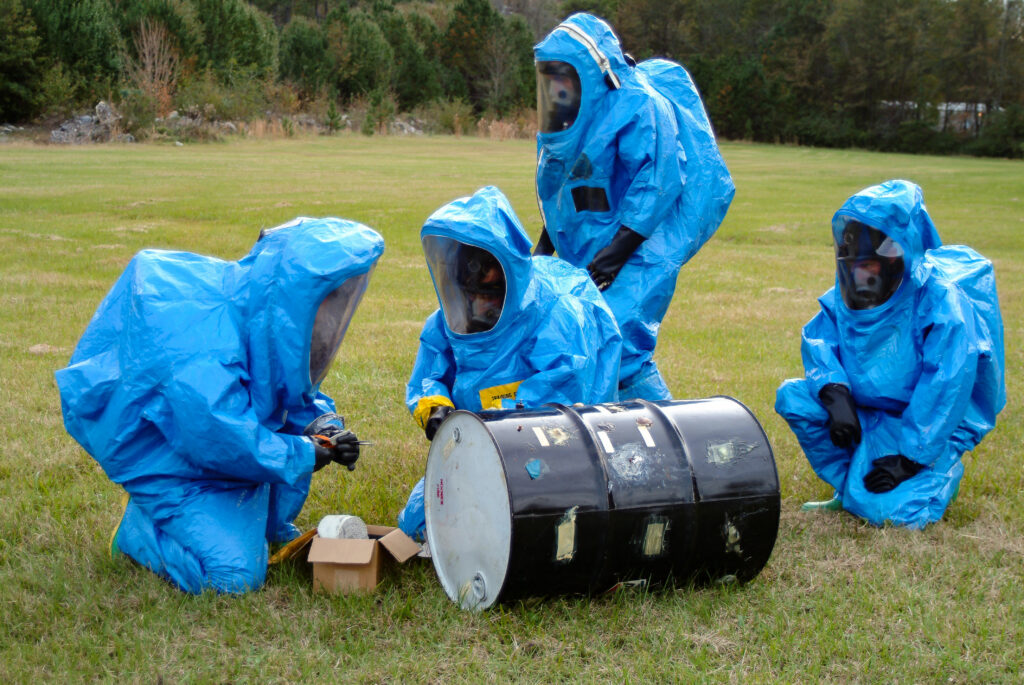
The Reality of HAZWOPER Work in California: Lessons from a Recent Hazmat Crash
An Article by The Modesto Bee highlighted the real-life risks working in hazardous environments and the potential consequences of not being properly trained. In May 2026, a serious hazardous materials incident occurred on Interstate 5 near Patterson, California, when a tanker truck overturned, triggering a full hazmat emergency response. The crash, reported around 10 a.m., resulted in major injuries, a complete highway shutdown in both directions, and uncertainty about the hazardous substance involved. Emergency responders were forced to quickly assess the situation without immediately knowing whether the material was hydrogen, propane, or another dangerous substance. It is crucial to have proper training programs when it comes to any job but especially ones that are life threatening. At NATEC, we prioritize keeping our NATEC HAZWOPER Training Programs up to date so that you and your employees are prepared for anything that comes your way on the job.
Why This Incident Matters
This wasn’t just a traffic accident; it was a high-risk hazardous materials event. In incidents like this:
- The entire area can become contaminated
- Vapors or leaks can threaten public safety
- First responders and workers face life-threatening exposure risks
- One wrong decision can result in explosions, chemical burns, or fatalities
In fact, reports indicate the truck may have been carrying a potentially hazardous substance, and witnesses noted the smell of leaking material, highlighting how quickly a situation can escalate. This is exactly the type of scenario that falls under HAZWOPER (Hazardous Waste Operations and Emergency Response).
The Danger of HAZWOPER Work
HAZWOPER work is one of the most dangerous roles in construction and emergency response because:
- You often don’t know what chemical you’re dealing with at first. Hazardous materials can be:
- Flammable
- Toxic
- Corrosive
- Explosive
- Exposure can happen through:
- Breathing vapors
- Skin contact
- Secondary contamination
In the Patterson incident, responders had to:
- Secure the area
- Identify the substance
- Protect themselves and the public
- Prevent further escalation
Without proper training, this situation could easily have resulted in fatalities.
Key California CCR Regulations HAZWOPER Workers Must Know
California enforces HAZWOPER through Cal/OSHA regulations in the California Code of Regulations (CCR), Title 8. Here are three critical CCR regulations every California HAZWOPER worker must understand:
1. CCR Title 8 §5192 – Hazardous Waste Operations and Emergency Response
This is the core HAZWOPER regulation in California. It requires:
- Proper training before handling hazardous substances
- Use of PPE (personal protective equipment)
- Emergency response procedures
- In a crash like the Patterson incident, only properly trained personnel should respond in accordance with Cal/OSHA regulations.
2. CCR Title 8 §5144 – Respiratory Protection
This regulation ensures workers are protected from inhaling hazardous substances. It requires:
- Respirator programs
- Fit testing
- Medical evaluations
- If the tanker was leaking gas, respiratory protection could be the difference between life and death.
3. CCR Title 8 §3203 – Injury and Illness Prevention Program (IIPP)
This regulation requires employers to:
- Identify hazards
- Train employees
- Implement safety procedures
- Every employer must prepare workers before an emergency happens, not during it.
Why Specialized HAZWOPER Training Is Critical
The Patterson crash shows exactly why general safety training is not enough. understand:
- How to identify unknown hazardous substances
- How to establish control zones
- When to evacuate vs. respond
- How to use PPE correctly
- How to avoid becoming a victim themselves
HAZWOPER training is not optional; it’s life-saving!
Train with Confidence: NATEC’s HAZWOPER Training Program
At NATEC International, we prepare workers for real-world scenarios like the one on I-5. Our training programs are designed to:
- Meet Cal/OSHA and federal OSHA standards
- Provide hands-on, practical instruction
- Teach real-world hazard recognition and response
- Ensure workers are confident and compliant
What sets NATEC apart:
- Industry-experienced instructors
- Real incident-based training (like this case)
- Up-to-date California regulatory compliance
- Flexible training options (on-site or classroom)
When an incident occurs, your team may not have much time to react. The right preparation can make all the difference. Make sure they’re ready. With our NATEC HAZWOPER Training Programs, you’re not just checking a box you’re giving your workers the knowledge and confidence to protect themselves, their team, and everyone around them. Train today, because tomorrow isn’t predictable.