
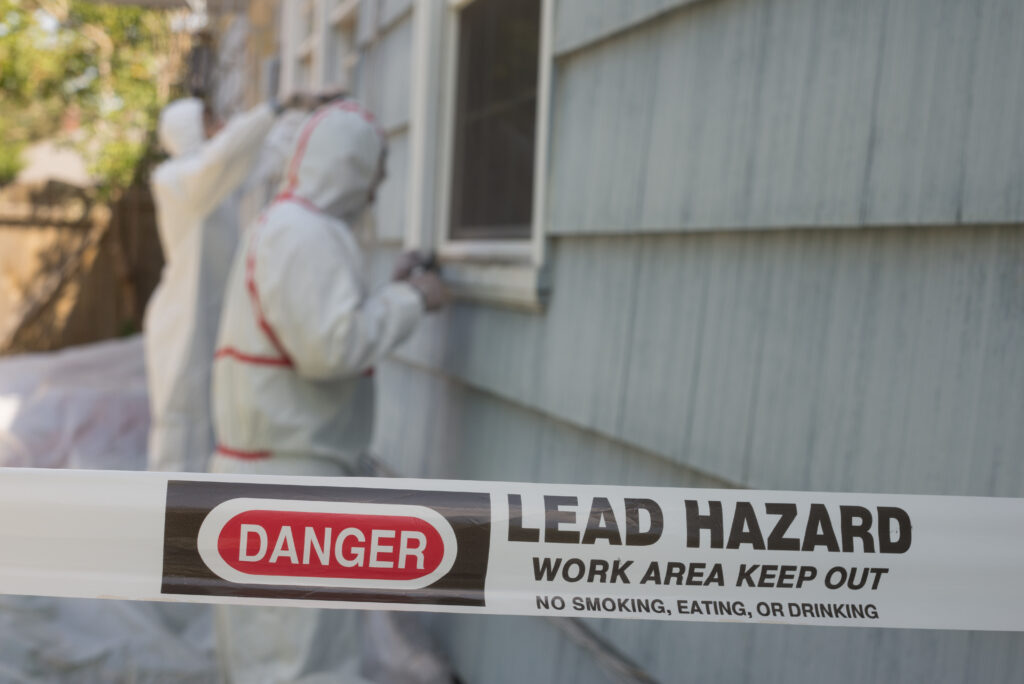
The Hidden Danger After the Flames: Lead Exposure in California and Why Training Matters
When most people think of wildfire damage, they picture burned homes and destroyed neighborhoods. But a growing body of evidence, especially from a 2026 Associated Press News Report, reveals a far more dangerous and invisible threat: toxic lead contamination lingering long after the fire is out.
This issue is not just environmental, it’s a serious occupational and public health risk governed by strict California regulations, including Cal/OSHA standards and California Code of Regulations (CCR) requirements. Understanding these dangers and how to properly respond is critical for protecting both employees and businesses. That is why NATEC Lead Training Programs are critical in supporting safer work practices, employee protection, and compliance readiness.
What the 2026 AP News Investigation Reveals
According to the 2026 AP News Report on Altadena wildfire recovery:
- Many homes that survived the fire were still contaminated with lead, asbestos, and toxic compounds long after cleanup.
- The AP article reported that, in a self-submitted dataset from 50 homeowners, average lead levels were almost 60 times higher than the EPA standard.
- The AP article describes ash as ‘a toxic soup’ and says it can contain pesticides, asbestos, plastics, lead, or other heavy metals.
- The AP article describes residents reporting symptoms such as sore throat, headaches, wheezing, and congestion.
§1532.1. Lead.
California Code of Regulations, Title 8, Section 1532.1. Lead.
- If employees perform Cal/OSHA-defined lead trigger tasks during construction, demolition, surface preparation, or cleanup where lead is present, employers must provide the protections required by Title 8, section 1532.1 until exposure is adequately assessed.
What’s even more concerning is that lead contamination remains after professional cleaning, showing that standard cleanup is often not sufficient without proper hazardous material protocols.
Why Lead Is So Dangerous
Lead is not just another contaminant; it is a powerful neurotoxin.
Health Impacts:
According to the California Department of Public Health, even low levels of lead exposure can cause harmful health effects, including impacts to the nervous system, cardiovascular system, kidneys, and reproductive health.
Cal/OSHA-required lead warning language includes:
MAY DAMAGE FERTILITY OR THE UNBORN CHILD
CAUSES DAMAGE TO THE CENTRAL NERVOUS SYSTEM
Where Lead Exposure Happens in California
The wildfire case highlights a broader reality: lead exposure can occur in multiple environments:
- Renovation, demolition, and surface preparation
- Abrasive blasting, welding, and torch cutting
- Industrial operations
- Contaminated dust, soil, and debris
California Regulations: Cal/OSHA and Title 8 CCR Section 1532.1
California has some of the strictest lead safety regulations in the country, enforced by California Division of Occupational Safety and Health.
Source: California Code of Regulations, Title 8, Section 1532.1. Lead. and Cal/OSHA Guidance
- Perform an employee exposure assessment under section 1532.1(d).
- Provide interim protections when employees perform trigger tasks until exposure is adequately assessed.
- Provide respiratory protection and implement a respiratory protection program when required.
- Provide medical surveillance, including blood lead testing, when required.
- Establish and implement a written compliance program before the job begins.
- Provide employee training and required hygiene and housekeeping protections.
- California employers performing covered construction work involving lead must comply with Title 8, section 1532.1, including exposure assessment, interim protection requirements for trigger tasks, respiratory protection, medical surveillance, employee training, hygiene provisions, and a written compliance program.
Employers must take proactive steps to identify, control, and document lead exposure risks—not just respond after contamination occurs.
Risks For Businesses
Lead exposure hazards present significant risks for employers if not properly controlled under Cal/OSHA requirements.
Without proper compliance:
- Employees can suffer serious long-term health effects
- Companies face Cal/OSHA violations and penalties
- Projects can be shut down due to unsafe conditions
- Insurance claims and litigation risks increase significantly
The Altadena case shows that even “cleaned” environments may still be hazardous, reinforcing the need for certified training and proper protocols.
Why NATEC Lead Training Is Essential
For California employers whose work is covered by the lead standards, employee training is a required part of compliance and an important safeguard for worker protection.
What NATEC Lead Training Programs provide:
- Understanding of Cal/OSHA and CCR compliance requirements
- Proper lead-safe work practices
- Training in containment, cleanup, and decontamination procedures
- Guidance on PPE, respirators, and exposure monitoring
- Reduces regulatory risk and liability
- Ensures jobsite compliance
- Builds client trust and credibility
- Helps avoid costly project delays or shutdowns
Businesses that invest in lead safety training protect their workforce, help support compliance with California Division of Occupational Safety and Health standards, and avoid costly fines, delays, and liability. With NATEC’s Lead Training Programs you’re not just checking a compliance box, you’re building a safer, smarter, and more resilient workforce.