
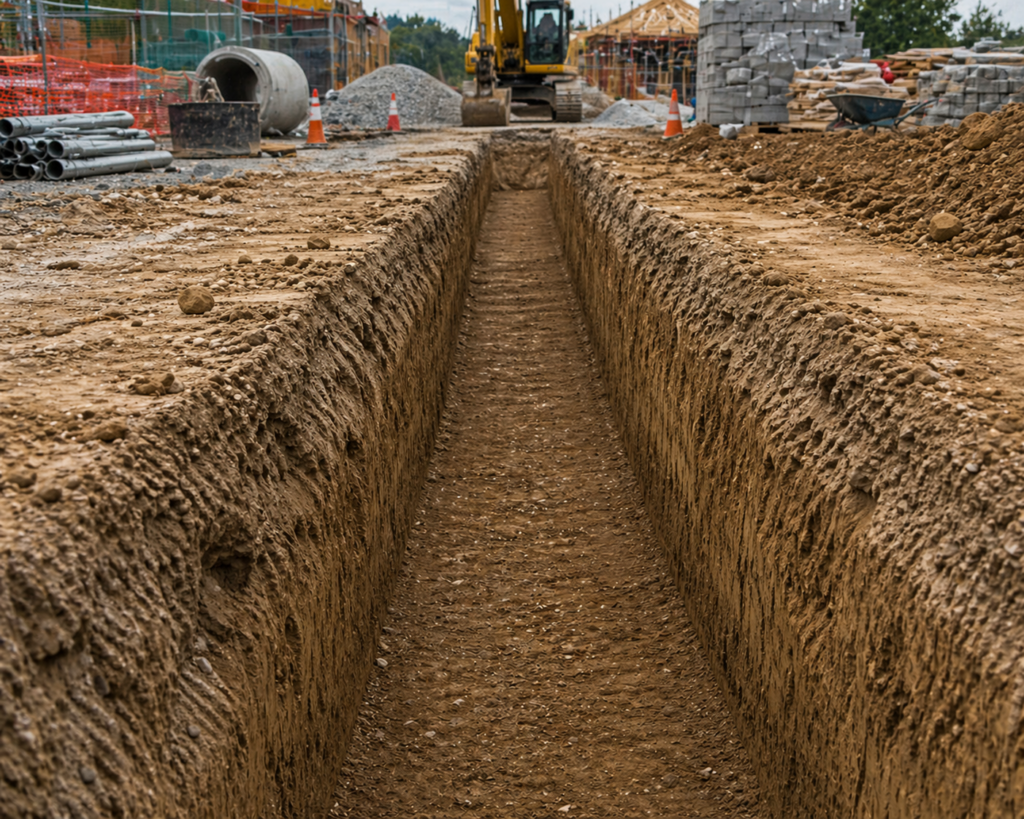
Trenching Safety Isn’t Optional: What A Recent OSHA Fatality Teaches Us
On April 16, 2026, OSHA announced that it had cited a Huntsville-based home builder after investigating a December 2025 trench-collapse fatality in Alabama. According to OSHA, workers were installing a sewage drainpipe in a Madison County subdivision when the trench collapsed on a construction laborer. OSHA found that the worker was in an unprotected and unsupported trench at the time of the collapse and was fatally injured.
Once again, this highlights one of the deadliest hazards in the construction industry: trenching and excavation work. This incident highlights the importance of up-to-date, regulation-compliant trenching and shoring training. This incident highlights the importance of up-to-date trenching and shoring training like our NATEC Trenching and Shoring Programs.
While the incident itself involved violations of existing safety standards, the bigger takeaway is clear. Trenching incidents are preventable, but only with proper training, planning, and compliance.
The Hidden Danger of Trenching Work
Trenching may look routine, but it carries extreme risks. The most dangerous hazard is cave-ins, which can occur suddenly and without warning.
- Just one cubic yard of soil can weigh over 3,000 pounds.
- Workers can be buried, crushed, or asphyxiated within seconds.
- Secondary hazards include toxic gases, flooding, and equipment strikes.
OSHA warns that trenching and excavation work can expose workers to serious hazards, including cave-ins and hazardous atmospheres.
OSHA Regulations: What Employers Are Required to Do
Under 29 CFR 1926 Subpart P (Excavations), OSHA lays out strict requirements for trench safety.
Key OSHA Requirements Include:
- Protective systems are required for trenches deeper than 5 feet unless the excavation is made entirely in stable rock.
- Protective systems must consist of an appropriate method such as sloping, benching, shoring, or shielding.
- A “competent person” must inspect trenches daily and after any event that could increase hazards, such as rainstorms or soil movement.
- Trenches over 20 feet deep require engineered protective systems.
Most importantly, workers must always be protected from cave-ins.
What Is Shoring and Why It Matters
Shoring is one of the most critical protective systems used in trenching:
- It involves supporting trench walls with hydraulic, pneumatic, or structural systems
- Its purpose is to prevent collapse, not just protect workers after a collapse
This distinction is crucial:
- Shoring = prevention
- Shielding (trench boxes) = protection after collapse
Without proper training, workers may misuse or incorrectly install these systems, leading to catastrophic consequences.
California CCR Requirements: Even Stricter Standards
For employers in California, compliance goes beyond federal OSHA.
Under California Code of Regulations (CCR), Title 8 § 1541. General Requirements, employers must ensure safe access and egress, protect workers from hazardous atmospheres and water accumulation, and have excavations inspected by a competent person as conditions change.California employers must comply with Cal/OSHA excavation requirements in addition to federal OSHA standards. If you’re working in California, training is not just recommended, it’s essential for compliance and ahead of the curve on any regulation changes that Cal OSHA may make.
The Real Root Cause: Lack of Training
The recent OSHA case reflects several common trenching safety failures, including:
- No competent person on-site
- Improper or missing protective systems
- Failure to recognize soil conditions
- Lack of hazard awareness
These failures can place workers at risk of serious injury or death and expose employers to significant OSHA penalties.
Why Trenching & Shoring Training Saves Lives
Effective training ensures workers and supervisors can:
- Identify soil types and hazards
- Select and install proper protective systems
- Conduct inspections and risk assessments
- Comply with OSHA and CCR requirements
- Respond quickly to changing site conditions
Without this knowledge, even experienced crews are at risk of injuries, fatalities, and OSHA citations.
Why Choose NATEC?
Tragedies like the recent Alabama trench collapse are a powerful reminder that safety isn’t theoretical, it’s immediate, real, and unforgiving when ignored. Every excavation site carries risk, but those risks can be controlled with the right knowledge, preparation, and leadership. Investing in proper trenching and shoring training isn’t just about meeting OSHA or CCR requirements, it’s about protecting lives, reducing liability, and building a culture where safety is second nature. That’s where NATEC makes the difference. Our NATEC Trenching and Shoring Programs equip your team with the practical skills, regulatory knowledge, and confidence needed to work safely and stay compliant. Don’t wait for an incident to expose the gaps, partner with NATEC today and take a proactive step toward safer jobsites and stronger teams.