
Protecting Workers from the Silent Hazard of Silica Dust
A recent enforcement action by the Occupational Safety and Health Administration (OSHA) highlights the very real dangers that workers in stone product manufacturing and other industries face from airborne silica dust. On May 14, 2025, OSHA announced that the Art-Stone Granite & Marble Inc. in Marietta, Georgia, was cited for two repeat and thirteen serious violations for failing to their protect employees from respirable crystalline silica and excessive noise exposures. The devastating reality of having a lack of precautions, proper protection plans and (up to code PPE, Personal Protective Equipment) resulted in $120,000 in penalties. OSHA News Release
This incident is a potent reminder for employers and workers alike of the significant health risks, regulatory obligations and financial consequences associated with silica exposure. This tragic event that OSHA brought to light points out the value of properly-designed training programs, such as our Online Cal/OSHA Silica Awareness Training Course.
The Hidden Dangers of Respiratory Exposure to Crystalline Silica
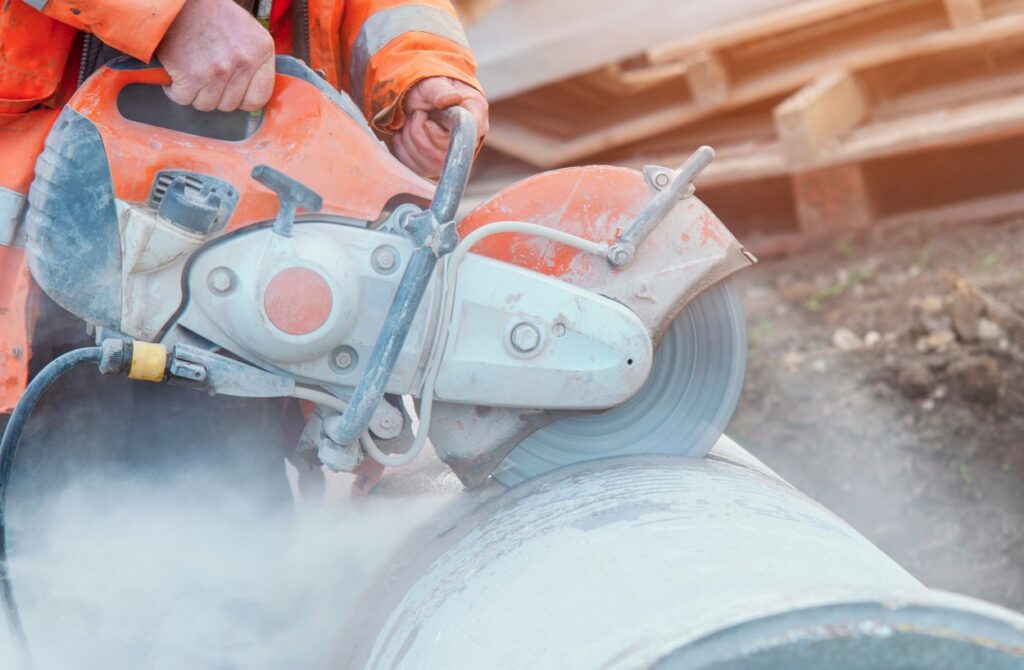
When workers crush, cut and grind materials like stone, concrete, brick or ceramic, they may release tiny particles of crystalline silica into the air. These respirable particles are extremely hazardous and according to OSHA:
- Exposure to respirable crystalline silica can result in serious and irreversible health conditions including silicosis, kidney disease, chronic obstructive pulmonary disease and lung cancer. OSHA Overview on Silica & Crystalline
- Employees must work with a High-efficiency particulate air (HEPA) filter is required for stone product manufacturing under the OSHA 29 CFR 1926.1153. This filter is at least 99.97 percent efficient in removing mono dispersed particles of 0.3 micrometers in diameter.
- Even while wearing the proper PPE while working, employees still can be exposed to silica from equipment failure, improper use of the equipment if the employee is not trained properly or because of inadequate controls over time. For those that are exposed to at or above the action level for thirty or more days per year, must be offered medical exams (which include X-rays and lung function tests) by the employer to ensure their safety. OSHA General Industry and Maritime Standards
Even seemingly routine tasks in stone manufacturing, countertop fabrication, masonry or other dusty industrial work, can expose employees to life-changing hazards unless the proper controls and training are firmly taken place.
Key Regulatory Requirements for Employers
For employers operating under OSHA’s 29 CFR 1910.1053 – Respirable crystalline silica and OSHA’s 29 CFR 1926.1153 – Respirable crystalline silica some of the main obligations include:
- Permissible Exposure Limit (PEL) and Action Level: Under 1910.1053(c), employers must ensure that no employee is exposed to airborne respirable crystalline silica above 50 µg/m³ (8-hour TWA)
- Exposure Assessment: Employers must assess employee exposure via air monitoring or objective data if exposure may reasonably be at or above the action level.
- Written Exposure Control Plan: Under 1910.1053(f)(2), a written plan must be maintained, describing tasks that expose employees, the controls used, housekeeping measures, and must be reviewed annually.
- Recordkeeping: Employers under the 29 CFR 1926.115 (k)(1)(i) through 1910.1053(k)(3)(i), must keep exposure measurement, objective data, medical surveillance and training records for specific durations. Specifically for the exposure and objective data records, they must be maintained for at least thirty years, while the medical records must be kept for the duration of the employee’s employment plus thirty years.
Failure to comply with these requirements, as the Georgia company found out can result in serious citations and costly penalties.
How NATEC International’s Training Course Can Help
At NATEC International, our Online Cal/OSHA Silica Awareness Training Course is designed specifically to help you meet the regulatory requirements, protect your workforce and avoid fines and citations. Here’s how we help:
- NATEC International aligns with OSHA regulations: Our training covers the full scope of the silica hazards, the obligations under 29 CFR 1910.1053 and 29 CFR 1926.1153 (depending on your operation). We explain the permissible exposure limits, action levels, exposure assessment requirements, control methods, housekeeping, medical surveillance and recordkeeping.
- High-Efficiency Particulate Air: Our Training program also covers everything HEPA related, from: Using a HEPA Vacuum, using HEPA Ventilation to even using a HEPA Respirator.
- Employee empowerment: We train your employees to recognize tasks with silica risk, understand control practices (engineering, work practice, respirator use), and know their rights and responsibilities, which in return fosters a stronger safety culture.
- California Regulation Ready: Given California’s strong regulatory environment (including enforcement by California Division of Occupational Safety and Health (Cal/OSHA) and local emphasis on silica, this training ensures you’re not just ready federally but also meeting state expectations.
Protect your team and your business, enroll in NATEC International’s Silica Awareness Training today to ensure your employees meet OSHA and Cal/OSHA standards safely and confidently. Don’t wait for a costly citation or for employees to be in risk of diseases, equip your workforce with the knowledge and skills to prevent exposure, protect health and maintain compliance with expert-led training from NATEC.