
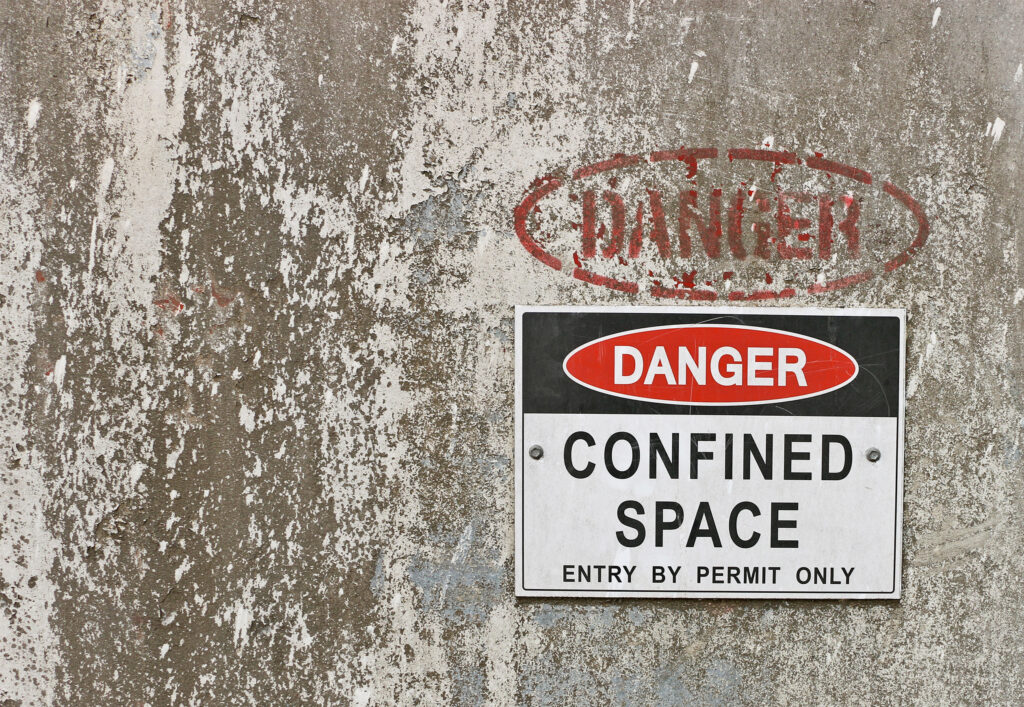
Confined Space and Respiratory Hazards: What Recent OSHA Enforcement Means for Employers
Workplace fatalities and serious injuries continue to occur when employers underestimate the dangers of confined spaces and hazardous atmospheres. A recent article by OSHA News Release – Atlanta Region highlights how quickly a routine task can become deadly without proper safety controls, training, and respiratory protection.
According to the recent OSHA investigation, the U.S. Department of Labor cited a petroleum tank services contractor after a worker died following exposure to toxic chemicals while inside a fuel storage tank. Investigators found the employee had been exposed to hazardous chemicals such as benzene and toluene during tank entry operations.
Incidents like this reinforce a critical lesson: confined space work and airborne hazards require strict compliance with OSHA standards, proper training, and effective respiratory protection programs like our NATEC Respirator Programs and our NATEC Confined Space Programs.
The Hidden Dangers of Confined Spaces
Confined spaces are found in many industries, including construction, utilities, manufacturing, and petroleum services. Tanks, vaults, pipelines, and silos may appear harmless, but they can quickly become life-threatening environments.
Typical confined space hazards include:
- Oxygen-deficient atmospheres
- Toxic gases and vapors (such as benzene or hydrogen sulfide)
- Flammable atmospheres
- Engulfment hazards
- Limited entry and exit during emergencies
OSHA regulates these environments under 29 CFR 1910.146 (Permit-Required Confined Spaces), requiring employers to identify hazards, monitor atmospheric conditions, implement rescue procedures, and ensure workers receive proper training.
When atmospheric hazards are present, employers must also comply with 29 CFR 1910.134 (Respiratory Protection) and CCR Title 8 § 5144 (Respiratory Protection) , which governs respiratory protection programs for workers exposed to airborne contaminants.
California Employers Face Even Stricter Regulations
For employers operating in California, compliance goes beyond federal OSHA standards. The California Code of Regulations (CCR) and Cal/OSHA safety orders impose additional requirements.
Key standards include:
- § 5157 – Permit-Required Confined Spaces (General Industry)
- § 1950 (Scope)
- § 1951 (Definitions)
- § 1952 (General Requirements)
- § 1953 (Permit-Required Confined Space Program)
- § 1954 (Permitting Process)
- § 1955 (Entry Permit)
- § 1956 (Training)
- § 1957 (Duties of Authorized Entrants)
- § 1958 (Duties of Attendants)
- § 1959 (Duties of Entry Supervisors)
- § 1960 (Rescue and Emergency Services)
- § 1961 (Employee Participation)
- § 1962 (Provision of Documents to the Chief of the Division of Occupational Safety and Health)
These regulations require:
- Written confined space entry programs
- Atmospheric testing before entry and monitoring during entry when hazards may develop.
- Entry supervisors and attendants
- Rescue planning and emergency procedures
California also continues to update confined space rules to strengthen worker protections in construction environments.
Respiratory Protection: A Critical Layer of Defense
Respiratory hazards are frequently present in confined spaces due to chemical vapors, oxygen deficiency, or airborne contaminants.
A compliant respiratory protection program must include:
- Medical evaluations
- Respirator fit testing
- Written respiratory protection programs
- Training on proper respirator use
- Maintenance, inspection, and storage procedures
- User seal checks
OSHA has cited numerous employers for failing to establish respiratory protection programs or for requiring workers to wear respirators without proper training and medical clearance. Without these controls, workers can be exposed to life-threatening chemical exposures within minutes.
The Role of Training in Preventing Tragedies
The common factor in many OSHA investigations is inadequate training. Workers often enter confined spaces without understanding atmospheric hazards, proper monitoring procedures, or emergency response protocols.
Effective safety programs must include hands-on training that prepares workers to:
- Recognize confined space hazards
- Conduct atmospheric testing
- Use gas monitoring equipment
- Implement entry permits
- Wear and maintain respiratory protection
- Respond to emergencies
This is where professional training programs become essential.
How NATEC Helps Employers Stay Compliant
To help organizations meet OSHA and Cal/OSHA requirements, NATEC International provides comprehensive training programs designed for real-world workplace hazards. NATEC’s Confined Space Programs & NATEC’s Respirator Programs help workers understand how to safely identify, enter, and work within permit-required spaces.
NATEC’s Training covers:
- OSHA confined space standards
- Hazard recognition and atmospheric monitoring
- Entry permits and safety procedures
- Rescue planning and emergency response
- Respirator selection, proper use, and limitations in hazardous environments
- Respirator fit testing procedures and compliance with OSHA respiratory protection requirements
- Medical evaluation requirements and respirator maintenance procedures
Don’t wait for an incident to reveal gaps in your safety program. Equip your workforce with the training they need through NATEC’s Confined Space and Respirator Programs.