Cal/OSHA Fall Protection Update Effective July 1, 2025
Protecting Workers at Every Elevation: Why California’s New Fall Protection Rules Matter
- Every day, workers across California risk their lives on elevated surfaces, scaffolds, rooftops and beams, while constructing the structures we depend on. Unfortunately, falls remain the leading cause of fatalities in construction. Effective July 1, 2025, Cal/OSHA is stepping up with new fall protection requirements aimed at saving lives and preventing injuries before they happen.
Let’s break down why this update matters and what employers need to do now to comply.
Action Checklist for Employers
- Audit your worksites for projects involving residential framing, roofing, or steel erection beyond 6 feet.
- Identify where fall protection systems must now be in place:
- Framing or sheathing at 6 ft+
- Roofing slopes ≥ 3:12 at 6 ft+
- Steel erection tasks per §1716.2 trigger height.
- Train field crews on updated requirements and equipment use.
- Update or produce fall protection plans:
- Only to be used where conventional methods are infeasible.
- Drafted by a qualified person, site-specific, maintained and documented.
- Document all inspections, training, anchor ratings, compliance depends on records.
Fall Protection Isn’t One Size Fits All
Employers must match protection methods to the environment and task. Common systems include:
- Guardrails for flat or low-slope rooftops.
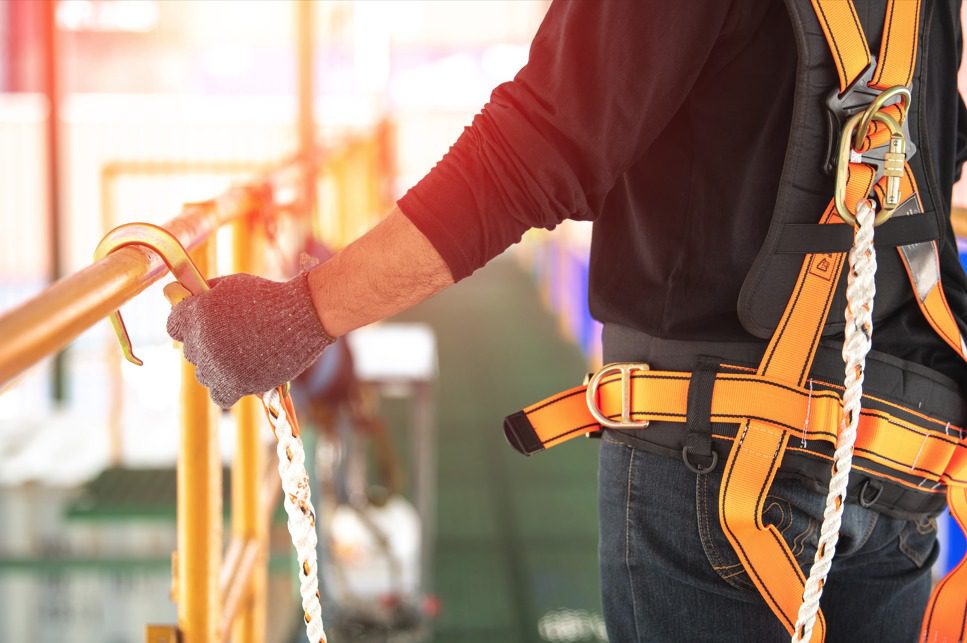
- Personal fall arrest systems (harnesses + anchor points) for high or irregular surfaces.
- Safety nets in open-frame structures or during steel erection.
- Scaffolds and supported platforms.
- A fall protection plan, only when other methods are truly infeasible.
Each method must be inspected, maintained, and matched to the correct use.
Why Fall Protection Matters More Than Ever
In 2023 alone, the construction industry reported the highest number of fatal falls across all sectors. According to the U.S. Bureau of Labor Statistics (BLS), slips, trips, and falls claimed more construction worker lives than any other hazard. These incidents are not just statistics, they represent real workers, families, and futures cut short.
California’s updated fall protection regulations aim to turn those numbers around.
What Employers Need to Know About the Regulation Changes
- Applies only when conventional fall protection (like guardrails or harnesses) is demonstrated to be infeasible or creates a greater hazard.
- There is now a presumption that conventional methods are feasible, placing the burden on the employer to justify exceptions.
- A fall protection plan must be developed by a qualified person, tailored to the specific site, and must include the identity of the qualified person; it should be maintained and updated as work progresses.
For more information: TITLE 8: Sections 1671.1, 1716.2, 1730 and 1731 of the Construction Safety Orders
§1716.2. Residential-type Framing Activities, Wood and Light Gage Steel Frame Construction
- This applies to wood and light gauge steel framing, including layout and installation of joists, sheathing, walls, trusses, fascia board, siding, and trim.
- Starting July 1, 2025, Cal/OSHA reduces the fall protection trigger height from 15 feet to 6 feet for these framing activities.
- When working on structural levels more than 6 feet above grade, employers must install fall protection using scaffolds, guardrails, safety nets, or personal fall arrest systems. A fall protection plan may only be used if conventional systems are infeasible and must follow §§1671.1 and 1671.2.
For more information: TITLE 8: Sections 1671.1, 1716.2, 1730 and 1731 of the Construction Safety Orders
§1730. Roof Hazards & §1731. Residential-type Roofing Activities
- §1730 applies to general roofing hazards, including roofs over 20 feet with machinery or steep slopes; requires warning lines, parapets, guardrails, or other protection.
- §1731 is specific to new residential-type roofing with slopes of 3:12 or greater.
- It mandates fall protection when working on roofs 6 feet or more above the level below, measured vertically (parapets do not lower this height).
- Acceptable systems include personal fall arrest, scaffold or catch platforms, guardrails and toe boards, or a compliant fall protection plan only when conventional methods are infeasible.
For more information: TITLE 8: Sections 1671.1, 1716.2, 1730 and 1731 of the Construction Safety Orders
Compliance Saves Lives
Falls are preventable. The updated Cal/OSHA rules recognize this by mandating stronger, more consistent protections across all work at height. Employers who prepare now will not only avoid penalties but also protect their workers from life-altering injury or worse.
The fall protection regulation has been enacted since July 1, 2025, ensure your compliance now.